
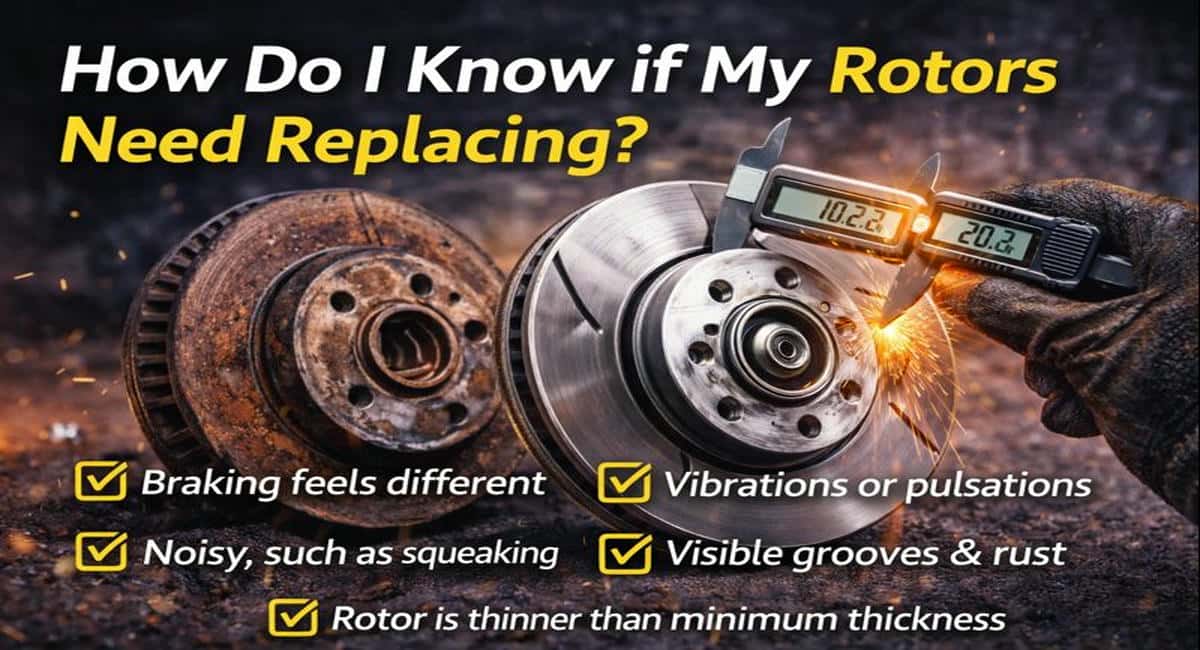
How Do I Know if My Rotors Need Replacing?
Being vehicle owners, we rely on our braking system whenever we drive. As much as people tend to focus on brake pads, the rotors, or the circular metal discs fitted to every wheel, silently take the brunt of the friction, resist high temperatures, and contribute significantly to safe stopping.
It is not always easy to know when they require service. However, your safety largely depends on this.
If you are wondering, “How do I know if my rotors need replacing?” I am here to answer that. Let’s dive into the details.
What is the Role of Brake Rotors?
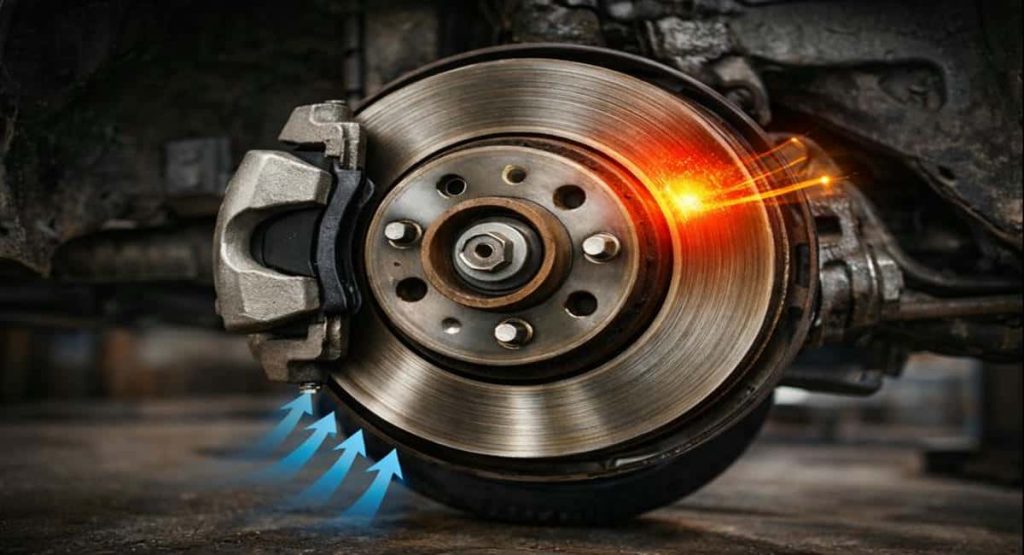
Brake rotors are used to produce friction when the braking pads stress them. Combined with time, this constant heat and pressure cause wear. Transport Canada reports that more than a quarter of all reported problems during vehicle maintenance per year concern braking components, and therefore, rotor awareness is crucial.
Factors that lower rotor life include:
- High-speed driving
- Frequent braking
- Driving in heavy traffic
- Towing or hauling loads
- Using low-quality brake pads, which often accelerates rotor damage, as discussed in how to identify the best aftermarket brake kits.
The average lifespan of rotors is 50,000-110,000km, with the choice of vehicle and its service practices.
Important Rotor Replacement Symptoms
It is necessary to identify the symptoms of rotor replacement to prevent significant repair expenses. Rotors wear out over time, and failure to notice the symptoms is easy unless we vigorously observe them.
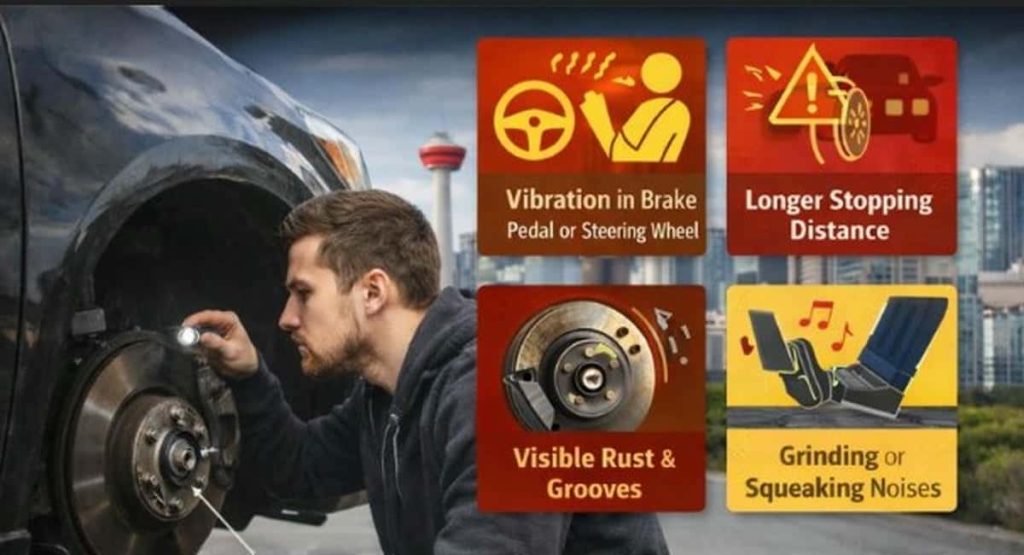
Common signs include:
- Shaking of the brake pedal or steering wheel.
- Breaking or scraping sounds when braking.
- Grooves, rust, or scratches that can be seen.
- Greater stopping distance.
- Burning smell after braking
Such rotor replacement symptoms frequently appear when the rotor surface becomes out of balance or over-worn. An inspection is urgent if they occur unexpectedly, especially when it is necessary to emergency brake.
Do I Need New Brake Rotors?
The question that many drivers ask themselves is, ‘Does my car require new brake rotors when my car begins to brake differently?’In the majority of situations, your car provides several cautionary signals before rotors get in a perilous state.
Ask yourself the following questions:
- Does the car take a longer time to stop than normal?
- Is there a feeling of pulse during braking?
- Are there any new squeakers or metallic noises?
- Is the brake pedal spongy or soft?
- Has the car travelled over 50,000km since the last time it was serviced?
When there are two or more yes answers to the question, you need rotor replacement.
Research indicates that in some cases, eotors in poor condition can cause a loss of up to 30% of braking power, and this means more accident potential, particularly at high speeds.
Common Signs of Warped Brake Rotors
Warped rotors are the ones that occur when the distortion of metal occurs due to overheating. This distortion will not allow the brake pads to take hold in a balanced manner, which will impact the stability and braking force.
Major signs of warped brake rotors include:
- Braking at high speed through pulsations.
- Shaking in the steering wheel.
- The more you drive, the faster you vibrate.
- Repeated braking, burning smell.
- Lopsided rotor wear or discolouration.
Such indicators of distorted brake rotors are more prevalent in cars that are regularly used on mountain roads or in traffic jams. Almost 40% of the service visits done on brakes result in the involvement of warped rotors.
How to Detect a Damaged Rotor?
You do not necessarily have to hire a mechanic to give you early alerts. It is possible to conduct some basic tests by yourself to understand the condition of the rotors.
1. Visual Inspection
Find cracks, rust, or hot spots. One of the indicators of how to know whether the brake rotor is bad without the help of advanced tools is the uneven look or damage on the surface.
2. Listen for Unusual Sounds
Grinding or scraping noises during braking often indicate rotor surface damage, which may also be related to worn pads explained in causes of brake squeal.
3. Feel for Vibration
When you can feel the brake pedal shaking beneath your foot then that is a great sign of rotor problems.
4. Condition of Check Brake Fluid and Pad
Rotor wear is mostly associated with damaged pads or low brake fluid. Monitoring safe pad thickness, reading how many mm is safe on brake pads, helps prevent rotor damage.
5. Pay Attention to Odors
The burning odor indicates overheating. It is one of the causes of rotor failure.
These simple inspections can help you identify a damaged rotor before it turns into risky conditions.
Minimum Rotor Thickness and Replacement Time
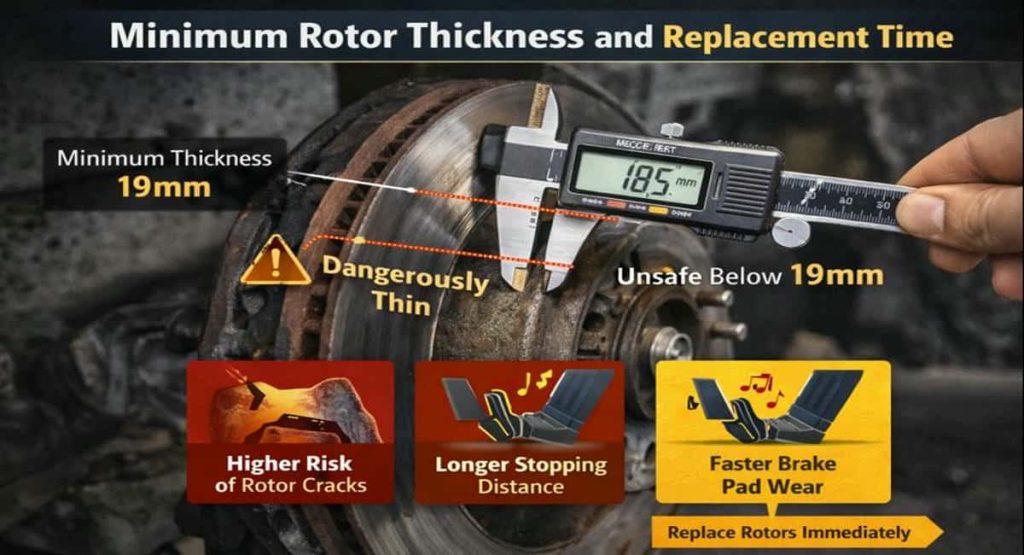
The manufacturer establishes a minimum rotor thickness at which each rotor should be replaced. This figure is typically impressed on the side of the rotor. Thickness is important since the rotors must have sufficient mass to soak up heat and release it safely.
Why thickness is critical:
- Thin rotors overheat faster
- Heat can cause cracks
- Under emergency braking, the chances of failure of the rotor increase.
- Thin rotors have a faster wear rate of the brake pads.
- The distance to stop becomes very long.
When your rotor gets to the minimum rotor thickness at which it needs to be replaced, then it becomes unsafe to continue driving.
Studies indicate that the performance of braking can suffer by up to 50 percent when rotors are below this threshold-immediate replacement is imperative.
At Stealth Windshield Repairs, we believe vehicle safety goes beyond brakes and rotors. Clear visibility plays a critical role in preventing accidents, especially during sudden stops or emergency braking. That’s why we provide reliable windshield repair in Calgary , helping drivers maintain a clear, unobstructed view of the road. By addressing chips and cracks early, we help reduce distractions, improve reaction time, and support safer driving alongside proper brake system maintenance.
Conclusion
Knowing rotor condition is not merely a maintenance issue but is also a safety issue. Learning what to watch, what to notice when something is wrong, and how to know when rotors reach their lowest limits makes us drive safely and prevent unforeseen failures. Frequent checking, correct driving, and service all help in long-term vehicle health.
When your braking system feels weird, it is always better to act before it is too late so that you can save your car and everybody on the road. Hopefully, you got the answer to your question, ‘How Do I Know if My Rotors Need Replacing?’