
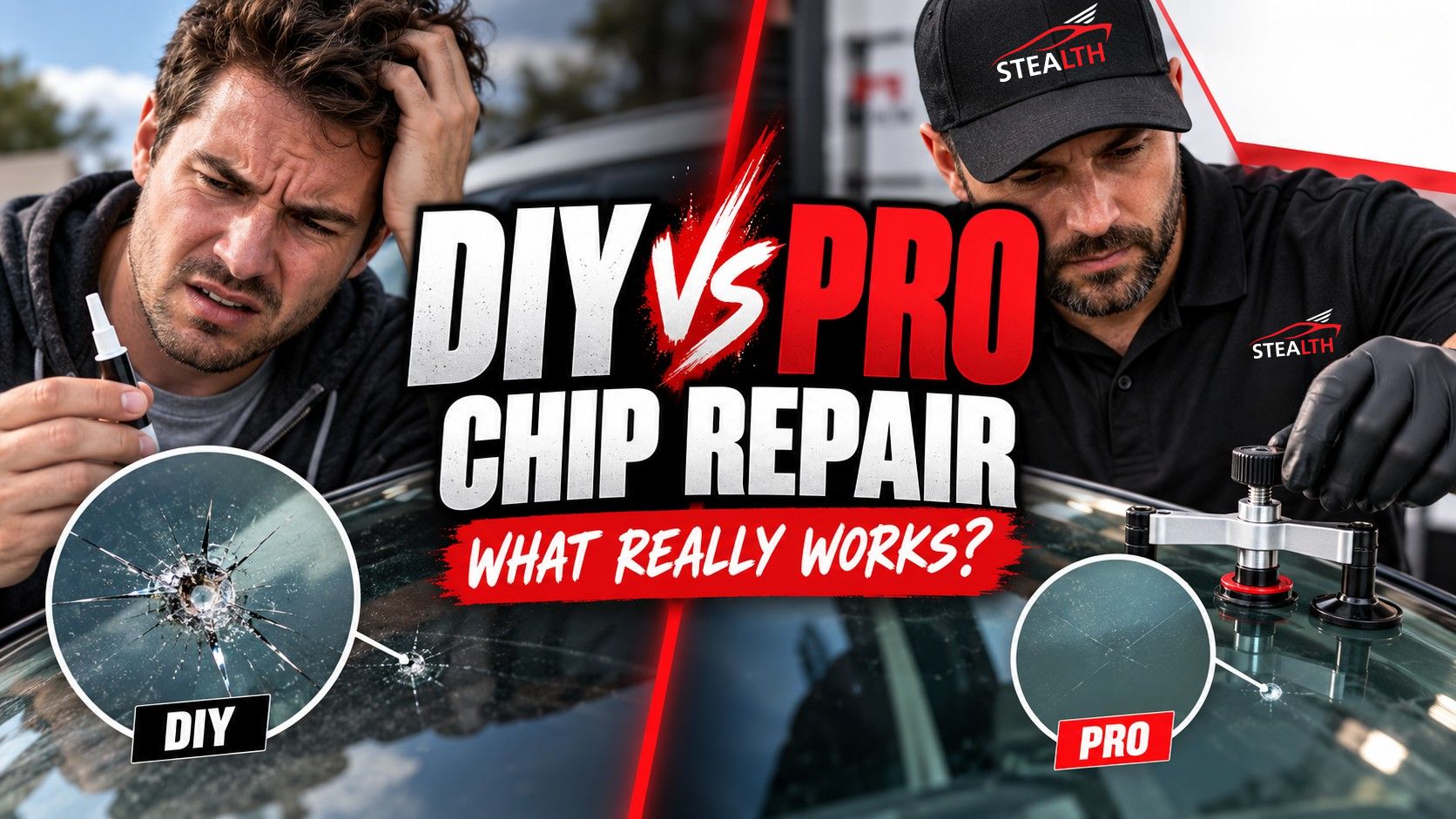
DIY Windshield Repair Kits VS Professional Chip Repair: What Really Works
You hear the familiar pop, and look over and there stands a small chip staring at you.
Looks harmless. You may be able to repair it yourself for $10–$20 with a windshield repair kit. Or perhaps it’s time to seek out a Windshield Repair in Calgary specialist and have it undergone the proper repair.
So, are do-it-yourself windshield repair kits effective, or would it be better to pay extra money for professional windshield chip repair?
The short answer: DIY kits can work on some new small chips, but only professional repair can handle damage that is complicated, widespread, contaminated, or hard to reach.
The important thing is to know what sort of situation you have on your hands before you make the repair worse.
What’s the Process of DIY Windshield Repair Kits?
The idea behind most DIY windshield repair kits is to fill the damaged area with a clear repair resin, remove air bubbles, and then “cure” the resin so it sticks to the glass.
Common components of a typical kit are a resin, a suction-cup or applicator, a pressure mechanism, curing strips, and possibly a razor blade. The process is intended to fill the void created by the impact and diminish the visibility of the chip while helping to prevent it from spreading.
There are many consumer kits designed to address the most common types of damage, including bullseye chips, star breaks, and small stone chips. The concept is valid in itself. In fact, professional windshield repair also involves injecting specialized resin into the damaged area. The major difference isn’t just “resin or no resin.” It’s the technician’s ability to assess the damage, prepare the glass, control resin injection, extract air, and determine if the damage is truly repairable.
For example, Rain-X’s current repair guidance states that its kit uses a one-time injection and curing process, and recommends professional evaluation if the damage remains a concern after the repair.
Do DIY Windshield Repair Kits Work?
Yes — but only to the extent of their limits.
A DIY windshield repair kit can be effective when you’re dealing with a small, relatively fresh chip that has not developed extensive cracks.
Chances of getting a decent result are better when:
- Damage from impact is minimal.
- The glass surrounding the chip is clean and dry.
- There is no damage to the edge of the windshield.
- No long cracks run from the impact.
- You can position the repair device precisely over the damage.
- The resin can penetrate the whole damaged area.
- You have the right conditions to cure the resin.
Timing counts too. An untreated chip can allow dirt and moisture to get in, making a clean repair more difficult — and Calgary’s weather doesn’t make waiting any easier. Safelite also suggests keeping fresh windshield damage dry and avoiding temperature extremes until it can be repaired.
The problem is that a successful DIY repair is more than just putting resin into a hole. If air is trapped in the damage, or the resin doesn’t flow all the way through the break, the finished repair may still be visible.
And that’s how DIY windshield repair usually goes wrong.
The Top Problems With DIY Windshield Chip Repair
The biggest advantage of a DIY kit is also its biggest drawback: you have to diagnose and repair the damage yourself.
A kit can’t tell you if the chip has breached the outer layer of the windshield, if a crack is beginning to spread, or if the location makes repair inappropriate.
There’s a learning curve, of course. It’s important to get the applicator perfectly centered. The pressure you apply matters. Trapped air has to be removed, and the resin has to be cured properly. Even the manufacturer instructions for a typical DIY kit emphasize careful alignment, controlled pressure, inspection for residual air, and proper UV curing.
Another problem is expectation. A DIY repair might not make the chip disappear completely, but it could stop or slow the damage from spreading. A faint mark may remain after the repair, especially with more complex impact patterns. That doesn’t mean the fix failed automatically.
Professional Windshield Chip Repair: What Are You Paying For?
When you hire an auto glass technician, you’re paying for much more than a bottle of resin.
A professional first evaluates the size, depth, location, and pattern of the windshield damage. The technician can then decide if the windshield can be repaired or if it’s safer to replace it.
The actual repair process typically consists of cleaning the affected area, creating the required vacuum and pressure with specialized equipment, injecting repair resin, allowing it to fully infiltrate the damage, and curing and finishing the repaired area. Many providers now offer this as a mobile windshield repair service, so a technician can come to your home or workplace instead of you driving in.
Professional repair is also often a lot quicker than a first-time DIY attempt. Safelite says trained technicians can often finish many windshield repairs in under 30 minutes, depending on the damage.
More importantly, an experienced technician knows when not to fix the glass — and that’s an important distinguishing factor.
DIY or Professional Windshield Repair? Which One Is Better?
Here is the practical comparison:
| Factor | DIY Windshield Repair Kit | Professional Chip Repair Service |
| Initial cost | Lower | Higher |
| Convenience | High, if you do it yourself | High, with mobile service options |
| Skill required | Moderate | Handled by a trained technician |
| Damage assessment | Your responsibility | Professional assessment |
| Resin application | Basic applicator | Specialized equipment |
| Cosmetic finish | Variable results | Generally more consistent |
| Complex damage | Poor candidate | Better assessment and options |
| Risk of a wrong repair | Higher | Lower |
| Best for | Small, simple chips | Complex or higher-value repairs |
So which one works better? For a small, simple chip, a quality DIY kit can definitely be worth considering. If the damage is larger, spreading, near the edge, contaminated, or visually significant, professional windshield chip repair is the safer bet.
When Should You Use a Do-It-Yourself Windshield Repair Kit?
If the damage is small, isolated, and well within the limits recommended by the kit manufacturer, DIY repair is the best option.
It’s also worth catching the chip soon after it happens and treating it before dirt, moisture, temperature changes, and road jostling compound the damage. But don’t assume “small” means “fixable.”
The location of the damage is just as important as the size. A professional can spot things that aren’t always obvious from the driver’s seat. If you’re unsure whether a chip can be repaired, it’s often smarter to get it inspected before using DIY resin.
Professional Windshield Repair: When Is It the Better Choice?
Think about professional auto glass repair when:
- Several cracks are radiating from the chip.
- Damage is on the edge of the windshield.
- A crack has already started to propagate.
- The damaged area is in your direct line of sight.
- Dirt or moisture has gotten into the damage.
- You don’t feel confident handling the repair kit properly.
- A previous DIY repair had limited success.
- You’re not sure if the damage extends further into the glass.
Cracks also become harder to control as they spread. Existing cracks can lengthen due to temperature changes, road vibration, and pressure. If the windshield can’t be safely repaired, a windshield crack repair specialist may recommend windshield replacement instead.
Will a Windshield Chip Turn Into a Crack?
Yes, it can.
A chip is a weakness in the windshield. Cracks can be created or lengthened by temperature changes, driving vibrations, potholes, and other stresses.
So waiting to see what happens with a little chip usually isn’t a great strategy. If you see fresh windshield damage, get it checked sooner rather than later. The longer the damage is exposed to moisture, dirt, vibration, and temperature changes, the more complicated the repair can become.
DIY Repair vs. Professional Repair: The Real Answer
There’s no overall winner.
DIY windshield repair kits are best as a low-cost solution for simple, small chips in your windshield. The basic idea is the same as a professional repair — injecting resin into the damaged glass — but the equipment, technique, and experience are different.
Professional windshield chip repair wins when reliability, correct damage assessment, cosmetic results, and complicated damage matter more than saving the cost of a service call. If your vehicle is covered, it’s also worth checking our guide to insurance claims for windshield repair in Calgary before you pay out of pocket.
One important note: don’t select a DIY kit just because the damage appears minor. It’s not just about visibility — the size, location, depth, crack pattern, and overall condition of the windshield damage all need to be evaluated.
The windshield is also an important piece of safety equipment for vehicles. NHTSA treats automotive windshields as a form of regulated glazing and distinguishes between the original glazing requirements and those for products used to repair damaged windshields that have already been installed. Therefore, a repair kit isn’t a substitute for knowing whether the windshield is really safe to repair. If you’re weighing the options for your own vehicle, our guide to windshield repair vs. replacement for Calgary drivers breaks down the decision in more detail, and our windshield repair cost guide can help you budget either way.
Frequently Asked Questions
DIY windshield repair kits: are they worth it?
Yes, for some small, simple chips. They can help stabilize a chip and reduce the look of damage. The results, however, are highly dependent on the type and amount of damage and how accurately the kit is applied.
Should you DIY windshield chip repair, or is professional repair better?
In general, professional repair is the better choice for complex or uncertain damage. A professional technician can assess the damage, use specialized equipment, and determine if repair or replacement is the best course of action.
Is it possible to get rid of a windshield chip altogether?
Not necessarily. A good repair can greatly reduce the look of a chip, but a faint mark may remain. The goal is to stabilize and fill the damaged area properly, not necessarily make the glass look brand new.
How quickly should you repair a chip in your windshield?
As soon as possible. New damage is easier to keep clean and dry, and fixing it early may keep a small chip from growing into a bigger crack.
Can you use a DIY kit on a cracked windshield?
That depends on the crack and the product. DIY kits are generally better for small impact damage than for large or spreading cracks. Always observe the limits given by the manufacturer, and get professional advice if the damage is extensive.
Repair or replace my windshield?
That depends on how big the damage is, where it is, how deep it is, and what type of damage it is. Small chips and some types of cracks can be repaired, but larger, spreading, or otherwise unsightly damage may require windshield replacement.
The Bottom Line
A DIY windshield repair kit may not be magical — but then again, it doesn’t have to be.
With the right small chip, it can be a practical and cost-effective way to handle windshield damage. But if the damage is complex, spreading, close to an edge, or important to your field of vision, professional windshield chip repair is generally the better choice.
The smartest approach isn’t to simply ask, “Which one costs less?”
Instead, ask: “What kind of damage do I have, and what’s the lowest-risk way to fix it right?”
That answer will tell you whether it’s time to grab a DIY repair kit — or contact an auto glass pro near you in Calgary.